What is Self-Service Reporting? 6 Benefits & Best Practices

Introduction
Modern teams don’t just want reports; they want fast, intuitive, and secure ways to explore their data. Self-service reporting has transformed how organizations access and analyze data, empowering non-technical users to generate insights without relying on IT or data specialists. This approach democratizes data, enabling faster decision-making and fostering a data-driven culture. In this guide, we explore what self-service reporting entails, its benefits, best practices, and how to implement it effectively.
What is self-service reporting?
Self-service reporting tools enable users to create and analyze reports without needing technical expertise. These tools offer intuitive interfaces for accessing and visualizing data independently. Users can generate real-time insights, customize, and share reports securely. With a clear understanding of what self-service reporting is, let’s see why it is important.
6 benefits of a self-service reporting
Self-service reporting offers practical advantages that make data analysis easier and more efficient for everyday users. These benefits focus on improving accessibility, security, and performance while supporting growth and collaboration.
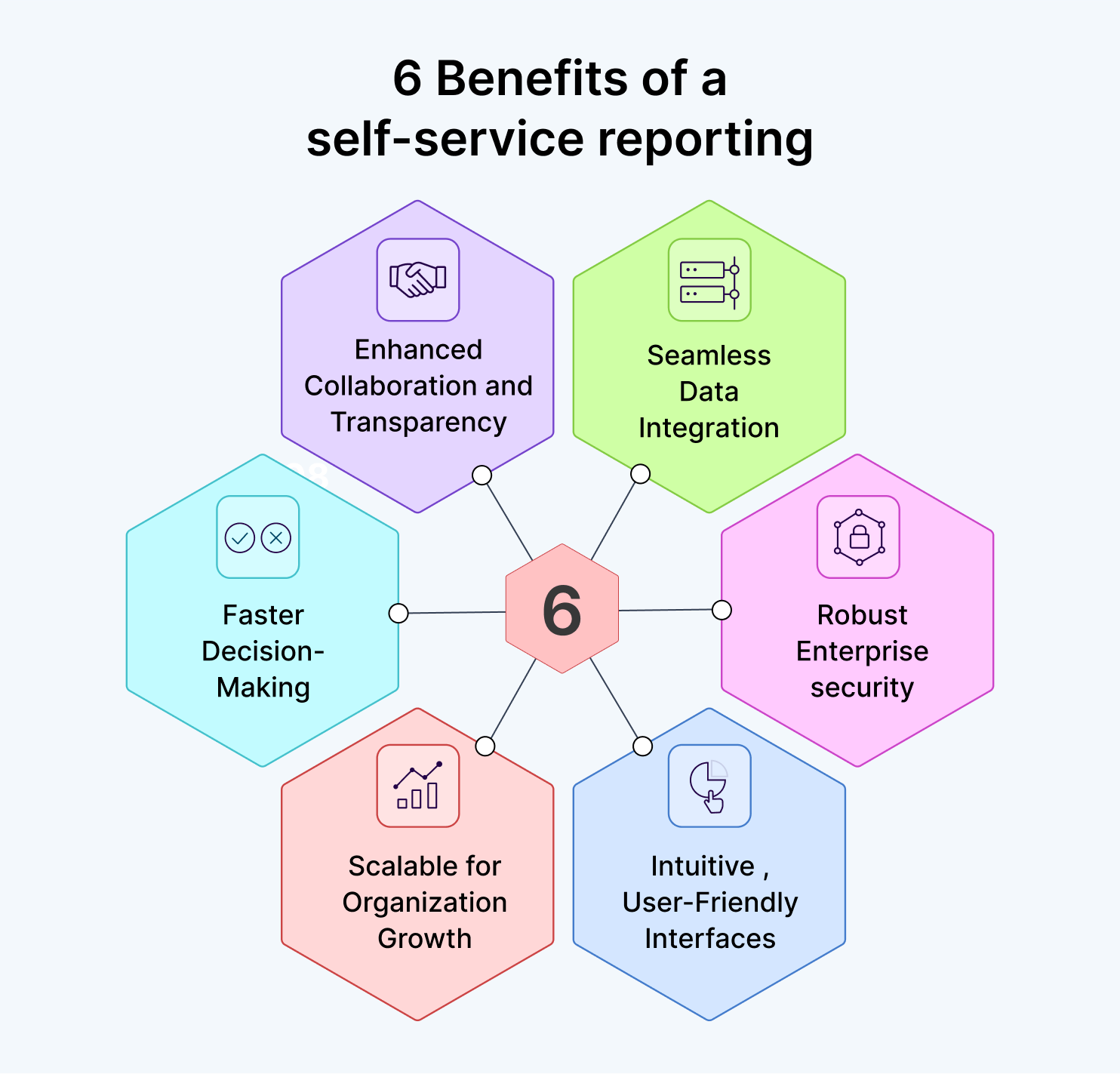
Seamless data integration: Self-service reporting platforms can easily connect with various data sources—like spreadsheets, databases, or cloud apps—making it simple to bring all your data together in one place without complex setup.
Robust enterprise security: Self-service reporting platform offers robust security features such as encryption, user authentication, and compliance with data protection standards, ensuring that sensitive business information remains safe.
Scalable for organizational growth: As your organization grows, the platform can scale with you—supporting more users, larger datasets, and more complex reporting needs without compromising performance or usability.
Intuitive, user-friendly interfaces: With intuitive interfaces like drag-and-drop designers and customizable dashboards, even non-technical users can create and manage reports confidently and efficiently.
Faster decision-making: By enabling users to access and analyze data instantly, self-service reporting reduces dependency on IT teams and speeds up the decision-making process across departments.
Enhanced collaboration and transparency: Teams can share reports easily, work from a single source of truth, and collaborate on insights—leading to better alignment and more informed strategies.
Next, let’s explore important features ever self-service platform should include:
Key feature to look for when choosing a self-service reporting platform
A self-service reporting platform offers powerful features that simplify data analysis and reporting for all users. These features include:
Intuitive drag-and-drop interfaces: Easily create reports without writing code. The visual designer lets you build and customize reports quickly, ideal for users who want results without technical complexity.
Live data connectivity: Access real-time insights by connecting directly to data sources like SQL databases or REST APIs. This ensures your reports always reflect the most current information.
Smart role-based permissions: Decide who can view, edit, or share reports with flexible access controls. This keeps your data secure while enabling smooth collaboration across teams or departments.
Secure and controlled sharing: Share reports confidently using built-in export options and access restrictions. Whether you’re working with internal teams or external partners, your data stays protected.
Cost-effective and scalable plans: Choose between pricing options that grow with your needs. Transparent plans help you avoid hidden fees while maximizing the value of your reporting tools.
Localization support: Empower global teams with localized interfaces and multilingual capabilities. This ensures consistent reporting experiences across different regions and languages.
Next, we’ll take a look at the best practices of self-service reporting.
Discover Bold Reports self-service reporting platform
Self-service reporting empowers teams to explore data independently, make faster decisions, and reduce reliance on technical support. Bold Reports® equips organizations with powerful capabilities that enable:
User-friendly design: Drag-and-drop simplicity with a no-code designer that’s easy to use and quick to master.
Flexible report customization: Build reports visually and tailor them to your needs using rich features and real-time data access.
Effortless data integration: Connect directly to live data sources like SQL and REST APIs for up-to-date insights.
Enterprise-grade security: Role-based access and secure sharing ensure governance and confidence in collaboration.
Cost-effective plans: Transparent, scalable pricing with no hidden costs helps you maximize value at every stage.
Global accessibility: Multilingual and localized experiences support consistent reporting across regions.
This platform empowers every team member to explore data, build reports, and share insights independently, eliminating the need for constant IT support and fostering a truly data-informed culture.
Ready to simplify reporting and unlock smarter decision-making? Get started in Bold Reports today with flexible and transparent pricing designed to fit businesses of all sizes. Empower your team with smarter reporting. Sign up for a 30-day free trial!


