How Healthcare Industry Can Benefit from Embedded Reporting

Introduction
In today’s data-driven healthcare landscape, timely access to actionable insights is critical for improving patient outcomes, streamlining operations, and ensuring regulatory compliance. Embedded reporting has emerged as a powerful solution, enabling healthcare professionals to access real-time data directly within the applications they use daily. This blog explores the concept of embedded reporting in healthcare, its benefits, the challenges it addresses, and how Bold Reports stands out as a leading solution.
What is embedded reporting in healthcare?
Embedded reporting in healthcare integrates analytics directly into applications like hospital systems and patient portals. Users can view and analyze data within the same interface used for patient care or administration, eliminating the need for external tools. This seamless experience improves decision-making and reduces workflow disruptions. Now, let’s explore the challenges faced by the industry.
What are the challenges faced by the healthcare industry?
Healthcare organizations operate in a complex environment where data is abundant but often difficult to manage effectively. Here are some of the key challenges they face:
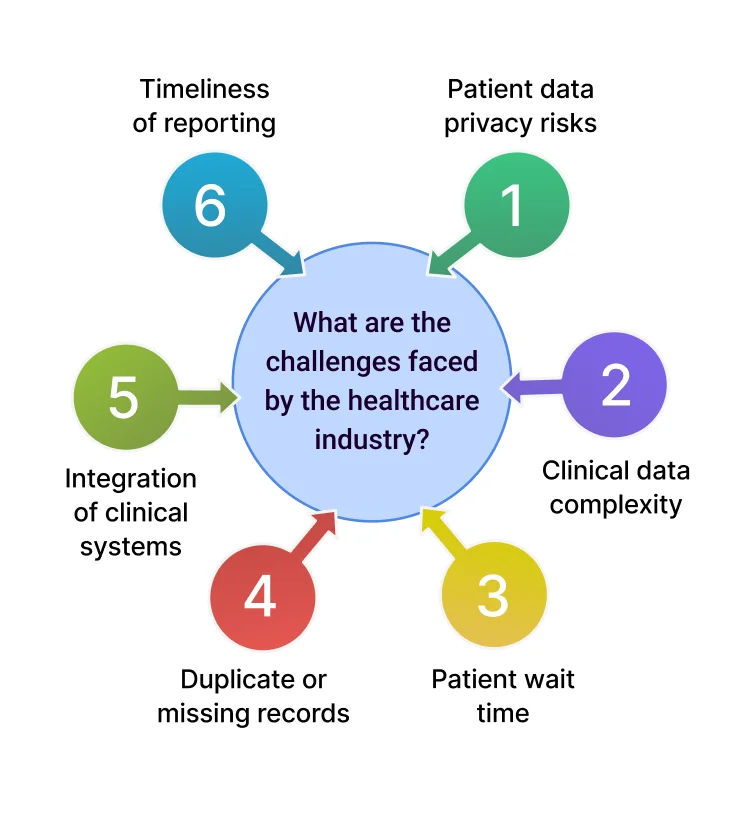
1. Patient data privacy risks: Ensuring compliance with HIPAA and other regulations is critical. Any lapse in securing patient data can lead to severe legal and financial consequences.
2. Clinical data complexity: Healthcare data comes from multiple sources like lab systems and imaging tools, making categorization and analysis difficult without standardized formats.
3. Duplicate or missing records: Inconsistent patient record management can result in duplicate entries or missing information, impacting care quality and billing accuracy.
4. Integration of clinical systems: Combining data from disparate systems like pharmacy and billing platforms is often complex and time-consuming.
5. Timeliness of reporting: Delays in collecting and validating clinical or operational data can hinder timely decision-making and compliance reporting.
6. Patient wait time: Long wait times for consultations, treatments, or test results often stem from inefficient data flow and delayed reporting. When clinical and operational data isn’t readily accessible, scheduling and resource allocation become challenging, leading to bottlenecks in patient care.
These challenges highlight the urgent need for integrated solutions like embedded reporting to streamline data access and improve healthcare delivery. Now, let’s explore the benefits of embedded reporting in healthcare.
How the healthcare industry can benefit from embedded reporting
Embedded reporting offers a transformative approach to healthcare data management by integrating analytics directly into clinical and administrative workflows. Here are five key benefits:
1. Real-time visibility into patient data: Embedded reporting provides instant access to up-to-date clinical and operational data, helping healthcare teams monitor patient records, treatments, and billing without delays.
2. Accuracy and standardization: Embedded reporting automates data validation to reduce errors and enforces uniform formats across reports to ensure reliable, consistent, and clear communication.
3. Compliance and governance: Embedded reporting strengthens compliance by maintaining detailed audit trails for patient care and billing while ensuring reports adhere to standards like HIPAA. Built-in rules and checks simplify regulatory audits and safeguard data integrity.
4. Better decision-making through reports: Embedded analytics help healthcare teams analyze treatment outcomes, resource utilization, and cost patterns to improve care quality and efficiency.
5. Seamless integration with healthcare systems: Embedded reporting tools integrate directly into hospital management systems and patient portals, eliminating the need to switch between platforms or export data for analysis.
Choosing the right embedded reporting solution requires alignment with your organization’s goals and infrastructure. Your success depends on seamless integration, compliance support, usability, and scalability.
Best practices for implementing embedded reporting in healthcare
To implement the best embedded reporting software into your healthcare organization, consider the following:

1. Integration capabilities: Ensure the tool works seamlessly with existing healthcare systems like hospital management platforms and patient portals.
2. Ease of use: Look for intuitive interfaces that support self-service reporting for clinicians and administrators.
3. Security and compliance: Choose a solution that offers robust data protection and meets healthcare regulations such as HIPAA.
4. Customization and scalability: The tool should adapt to your organization’s evolving needs, from small clinics to large hospital networks.
5. Support and documentation: Reliable customer support and comprehensive documentation are essential for successful implementation in healthcare settings, ensuring smooth integration with clinical workflows and compliance requirements.
These tips help you choose an embedded reporting solution that fits your organization’s needs. Bold Reports stands out with superior functionality, flexibility, and healthcare-specific features.
Why is Bold Reports the best embedded reporting platform for your healthcare organization?
Bold Reports offers a comprehensive solution tailored to the needs of healthcare organizations. These include:
1. Embedded reporting for seamless access: Healthcare professionals can access critical insights without leaving their workflow. Embedded reporting integrates custom or pre-built clinical and operational reports directly into healthcare applications, eliminating context-switching and accelerating decision-making.
2. Real-time collaboration for faster decisions: Embedded reporting enables healthcare teams to collaborate on reports in real time, allowing instant sharing of patient data, synchronized updates, and faster consensus—essential for improving care coordination and treatment planning.
3. Enterprise-grade security for healthcare data: Patient data demands the highest level of protection. Embedded reporting ensures compliance with healthcare regulations and provides encryption, role-based access, and secure authentication to keep sensitive information safe.
4. White-label reporting for brand consistency: Healthcare organizations can deliver branded reports that reflect their identity. Embedded reporting supports full customization, enabling professional presentation without building reporting tools from scratch.
5. Flexible deployment to fit healthcare operations: Whether hosted on-premises for regulatory compliance or in the cloud for scalability, embedded reporting adapts to healthcare infrastructure, ensuring efficient reporting across diverse environments.
6. Multitenancy for scalable healthcare management: For large hospital networks or multilocation clinics, embedded reporting supports multitenant architecture, enabling centralized control and secure isolation of patient data across departments without sacrificing performance.
7. Pixel-perfect reporting for professional output: Layout accuracy matters in healthcare. Embedded reporting delivers pixel-perfect reports tailored for screen and print, ensuring patient summaries, compliance documents, and regulatory reports meet professional standards.
8. Rich data visualizations for clinical clarity: Embedded reporting helps healthcare teams turn complex clinical and operational data into clear, interactive visuals. From treatment trends to resource utilization, these visualizations make it easier to interpret outcomes and share insights effectively.
These features make Bold Reports a reliable partner for healthcare organizations seeking to modernize their reporting infrastructure. In addition to these features, Bold Reports also helps healthcare management track and monitor all key patient data in one consolidated place, enabling a unified view of clinical, financial, and operational metrics. This centralized reporting approach enhances transparency, improves coordination across departments, and supports data-driven decision-making at every level of care. Let’s explore an example of such reports in detail.
Bold Reports healthcare report
Patient experience analysis report
Due to frequent struggles with fragmented data, limited visibility into patient satisfaction, operational delays, and inefficient resource allocation, healthcare organizations often face challenges in delivering high-quality care. The patient experience analysis report addresses these issues by enabling healthcare providers to monitor and evaluate patient satisfaction and operational efficiency across different hospital departments.
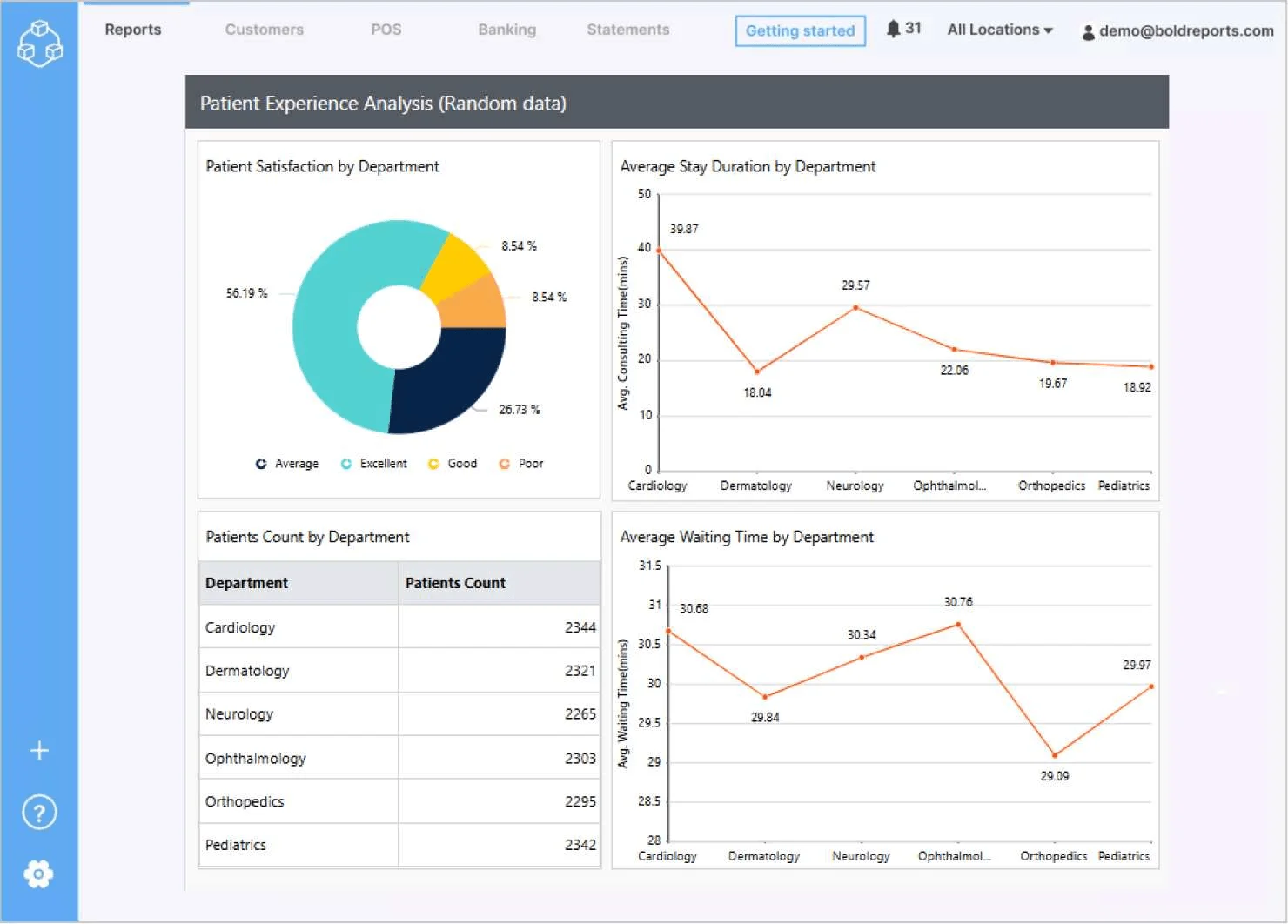
This report consolidates feedback, wait times, treatment outcomes, and resource usage into a single dashboard, helping administrators identify bottlenecks, improve service delivery, and enhance overall patient experience. To explore the key metrics and KPIs used in this healthcare report example, refer to our live demo.
Key takeaways
Embedded reporting is transforming healthcare by simplifying data management, improving compliance, and enabling real-time insights—all within the applications clinicians use every day. By integrating analytics directly into workflows, healthcare organizations can reduce manual effort, enhance decision-making, and deliver better patient outcomes.
Ready to modernize your reporting strategy? Bold Reports® offers a seamless, secure, and scalable embedded reporting solution tailored for healthcare. Start your journey today—sign up for a free 30-day trial or request a personalized demo to see how Bold Reports can help you unlock smarter, faster, and more compliant reporting.


