Gain Real-Time Insights with Embedded Reporting in Finance

Introduction
Finance teams today are expected to deliver fast, accurate insights that drive strategic decisions. Traditional reporting methods—often manual and disconnected—can no longer keep up with the pace of modern business. Embedded reporting offers a smarter solution by integrating real-time reports directly into financial applications. This eliminates the need to switch between platforms, reduces errors, and saves valuable time. This blog explores why embedded reporting is essential for finance teams, including its top benefits, use cases, and how to choose the right solution for your organization.
What is embedded reporting in finance?
Embedded reporting in finance refers to the integration of financial reporting platforms directly into business applications, allowing users to access, view, and interact with financial data without switching platforms. With Bold Reports®, finance teams can securely embed real-time and pixel-perfect reports into internal systems or client-facing apps using REST APIs, reporting components, or embed URLs.
What are the challenges faced by the finance industry?
The finance industry in 2025 faces a complex mix of challenges driven by economic, technological, regulatory, and geopolitical factors. Here are the key challenges currently affecting the sector:
1. Complex financial workflow inefficiencies: Manual invoice processing, poor tracking systems, and fragmented data sources lead to delays, duplicate or missing invoices, and slow financial reporting. These inefficiencies increase errors, audit risks, and hinder accurate, timely decision-making.
2. Balance sheet reconciliation issues: Inaccurate or incomplete data entries, especially from multiple systems, make it difficult to reconcile balance sheets accurately and on time.
3. Paystub errors and compliance risks: Generating accurate paystubs is challenging due to frequent changes in tax laws, benefits, and deductions, which can lead to employee dissatisfaction and compliance issues.
4. Expense analysis complexity: Categorizing and analyzing expenses across departments or projects is often hindered by inconsistent reporting formats and a lack of real-time visibility.
5. Integration of payroll data: Integrating payroll data into financial systems for reporting and analysis is often complex, especially when using separate platforms or third-party providers.
6. Fraudulent expense claims: Without robust controls, finance departments may struggle to detect and prevent fraudulent or inflated expense claims.
7. Audit trail gaps: Lack of proper documentation and tracking for invoices, paystubs, and expenses can create gaps in audit trails, increasing risk during financial audits.
Top benefits of embedded reporting for finance teams
Embedded reporting powers a finance department with the following:
1. Improved financial accuracy and real-time visibility: Embedded reporting provides finance teams with instant access to up-to-date financial data. It automates processes like invoice management and expense tracking, reducing manual errors and delays. This leads to more accurate financial statements and supports faster, more informed decision-making.
2. Enhanced compliance and audit readiness: With built-in regulatory checks and automated report generation, embedded reporting ensures adherence to compliance standards. It also maintains detailed audit trails, making both internal and external audits more efficient and transparent.
3. Better decision-making through reports: Embedded reporting platforms help finance teams analyze spending patterns, forecast cash flow, and identify cost-saving opportunities with greater precision.
4. Reduced manual workload: Automation of routine reporting tasks frees up finance staff to focus on strategic activities rather than manual data entry and spreadsheet management.
5. Consistent and standardized reporting: Embedded solutions enforce consistent formats and calculations across reports, reducing discrepancies and improving communication with stakeholders.
6. Seamless integration with financial systems: These platforms integrate directly into existing ERP or accounting platforms, eliminating the need to switch between systems or export data for analysis.
Having explored the benefits of embedded reporting in finance, let us look at the key features to have in mind while selecting an embedded reporting solution.
How to choose the right embedded reporting solution
With many tools in the market, how do you choose the right one? Here are key factors to consider:
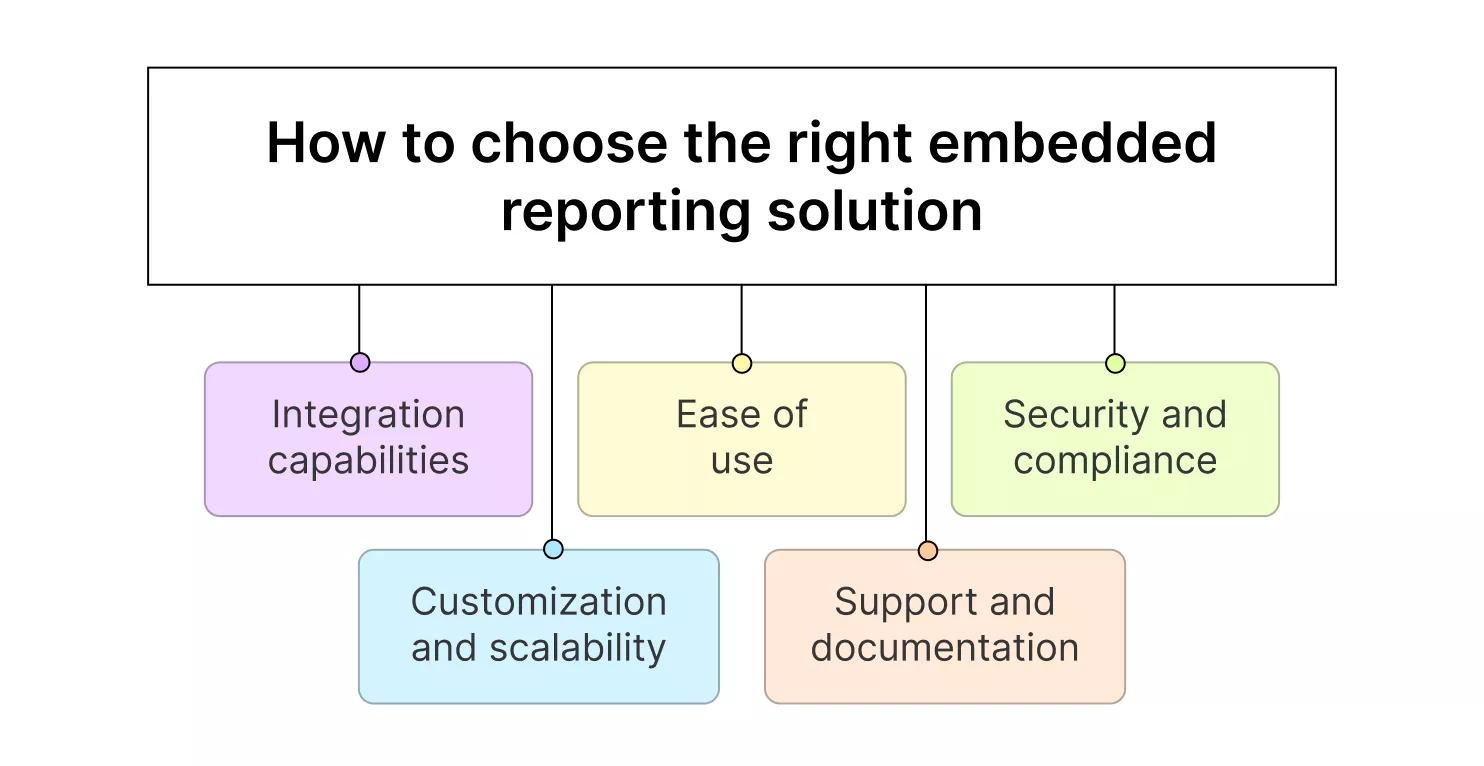
1. Integration capabilities: Ensure the tool works seamlessly with your existing financial systems.
2. Ease of use: Look for intuitive interfaces that support self-service reporting.
3. Security and compliance: Choose a solution that offers robust data protection and meets regulatory standards.
4. Customization and scalability: The tool should adapt to your organization’s evolving needs.
5. Support and documentation: Reliable customer support and thorough documentation are essential for successful implementation.
By following these tips, you can select an embedded reporting solution that aligns with your organization’s goals. Now, let's explore why Bold Reports can be your best choice.
How Bold Reports simplifies embedded financial reporting
Bold Reports might be the best option for any finance team struggling to choose the right embedded reporting tool in their department. This is because it empowers you with numerous features useful for streamlining financial workflows and enhancing data accuracy, as shown:
Embedded reporting for seamless access: Finance professionals can access critical insights without leaving their workflow. Bold Reports enables the embedding of custom or prebuilt financial reports directly into business applications—eliminating context-switching and accelerating decision-making.
Real-time collaboration for faster decisions: Bold Reports empowers finance teams to collaborate on reports in real time. This means instant sharing of financial insights, synchronized updates, and faster consensus—essential for agile financial planning and forecasting.
Enterprise-grade security for financial data: Financial data demands the highest level of protection. Bold Reports ensures compliance and control with encryption at every layer, role-based access, and secure authentication—keeping sensitive financial information safe.
White-label reporting for brand consistency: Finance teams can deliver branded reports that reflect their organization’s identity. Bold Reports supports full customization, allowing teams to present financial data professionally without building reporting tools from scratch.
Flexible deployment to fit financial operations: Whether hosted on-premises for regulatory compliance or in the cloud for scalability, Bold Reports adapts to your financial infrastructure. This flexibility ensures secure, efficient reporting across diverse financial environments.
Multi-tenancy for scalable financial management: For financial services and SaaS providers, Bold Reports supports multi-tenant architecture—enabling centralized control and secure isolation of financial data across departments or clients, without sacrificing performance.
Pixel-perfect reporting for professional output: Accuracy in layout matters in finance. Bold Reports delivers pixel-perfect reports tailored for screen and print, ensuring financial statements, audits, and regulatory documents meet professional standards.
Rich data visualizations for financial clarity: Bold Reports helps finance teams turn complex data into clear, interactive visuals. From trend analysis to KPI tracking, these visualizations make it easier to interpret financial performance and share insights effectively.
In addition to these features, Bold Reports also provides interactive reports that the finance team can drill into for deeper analysis. Users can filter, sort, and explore data dynamically—enabling more granular insights and empowering better financial decisions. Let’s explore them in detail.
Bold Reports’ finance report examples
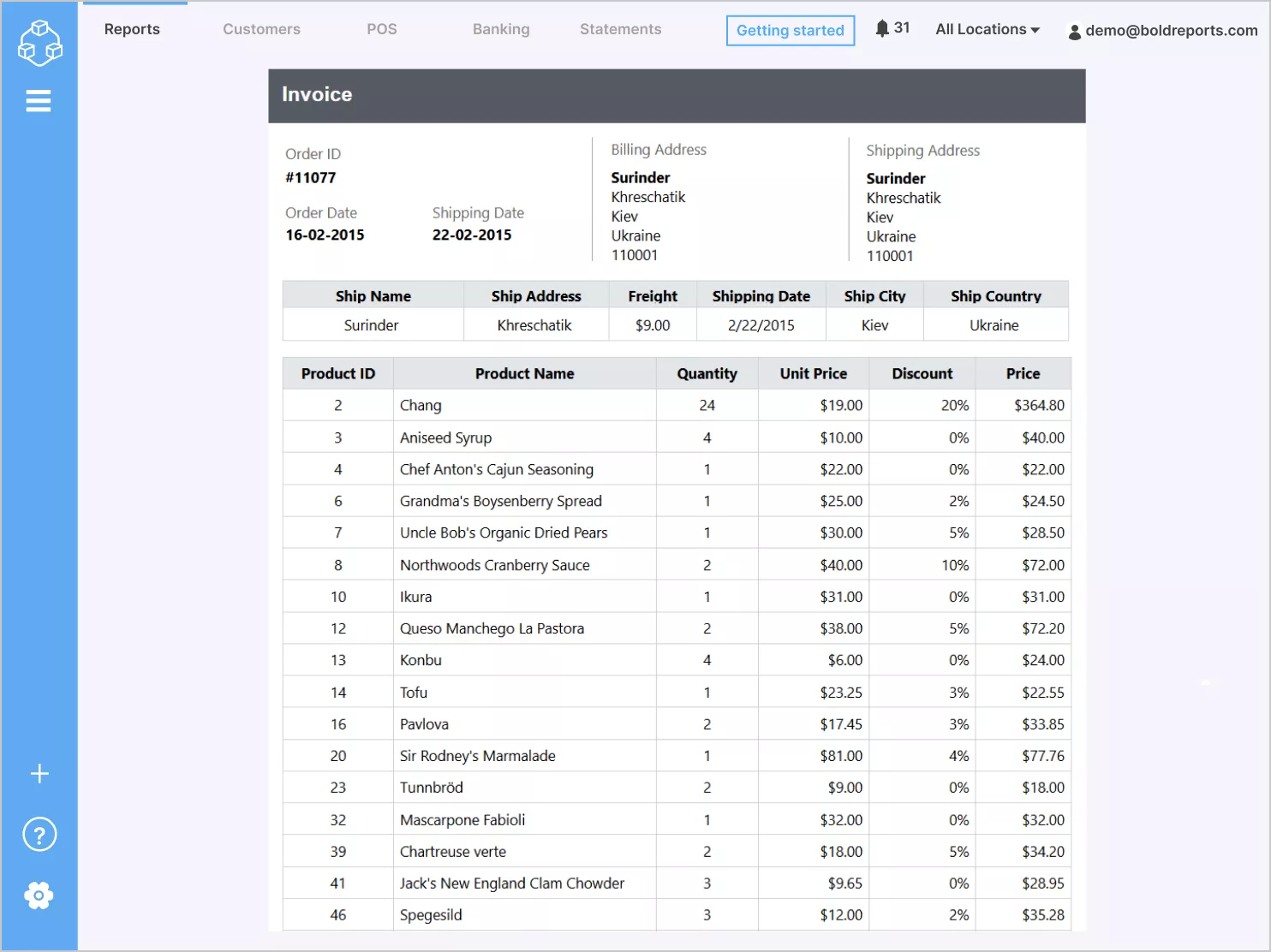
Invoice report
Retail businesses often struggle with manual invoice generation, inconsistent formats, and tracking payment statuses. This invoice report automates invoice creation, integrates billing and shipping details, and ensures consistency with pixel-perfect layouts. It also enables real-time access to invoice data within business applications, improving operational efficiency.
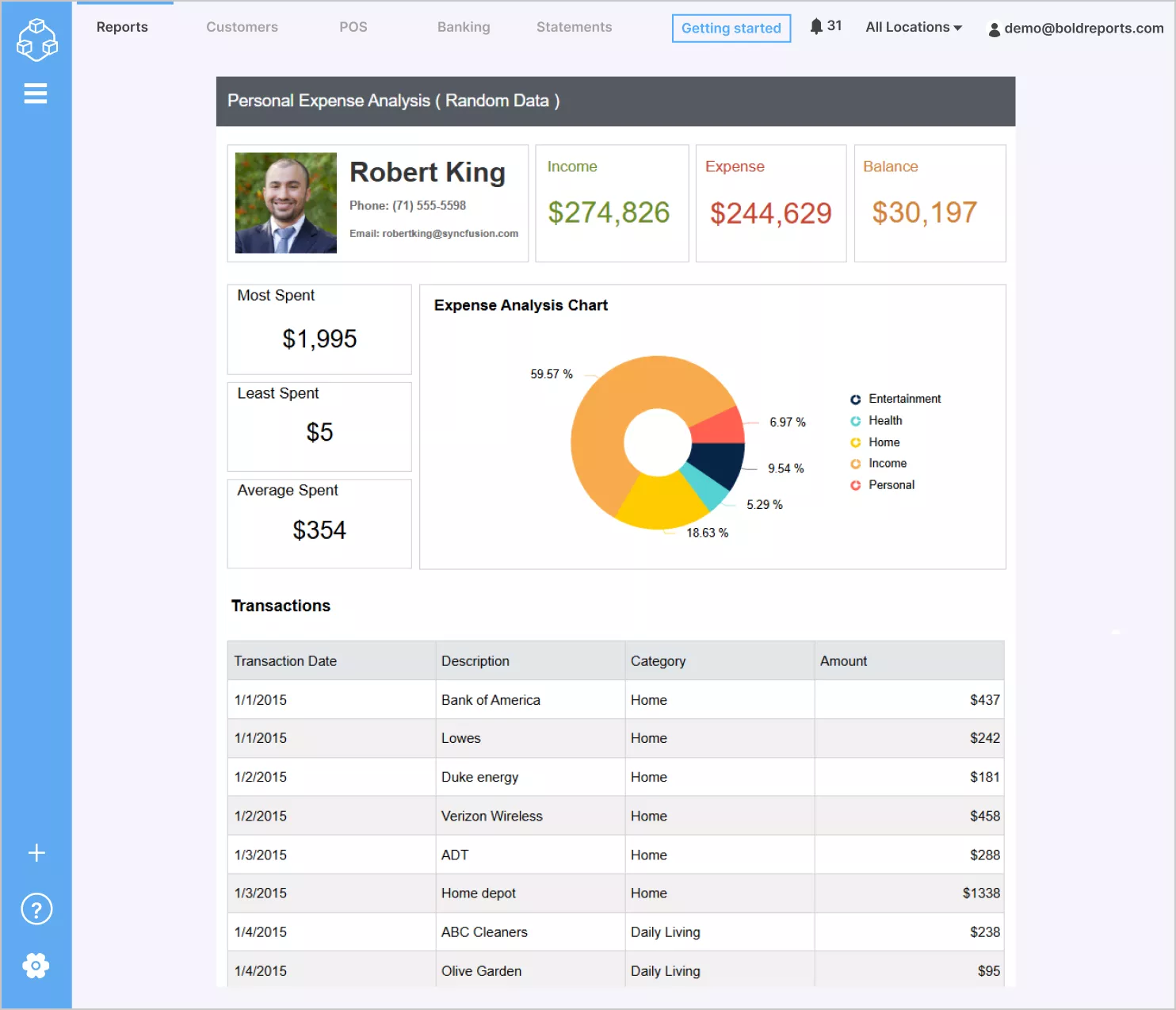
Personal expense analysis report
Individuals face challenges in tracking expenses, forecasting budgets, and understanding spending habits. The personal expense analysis report visualizes income and expenses using charts and tables, offers predictive insights, and allows drilldowns into specific categories. This empowers users to make informed financial decisions and manage budgets effectively.
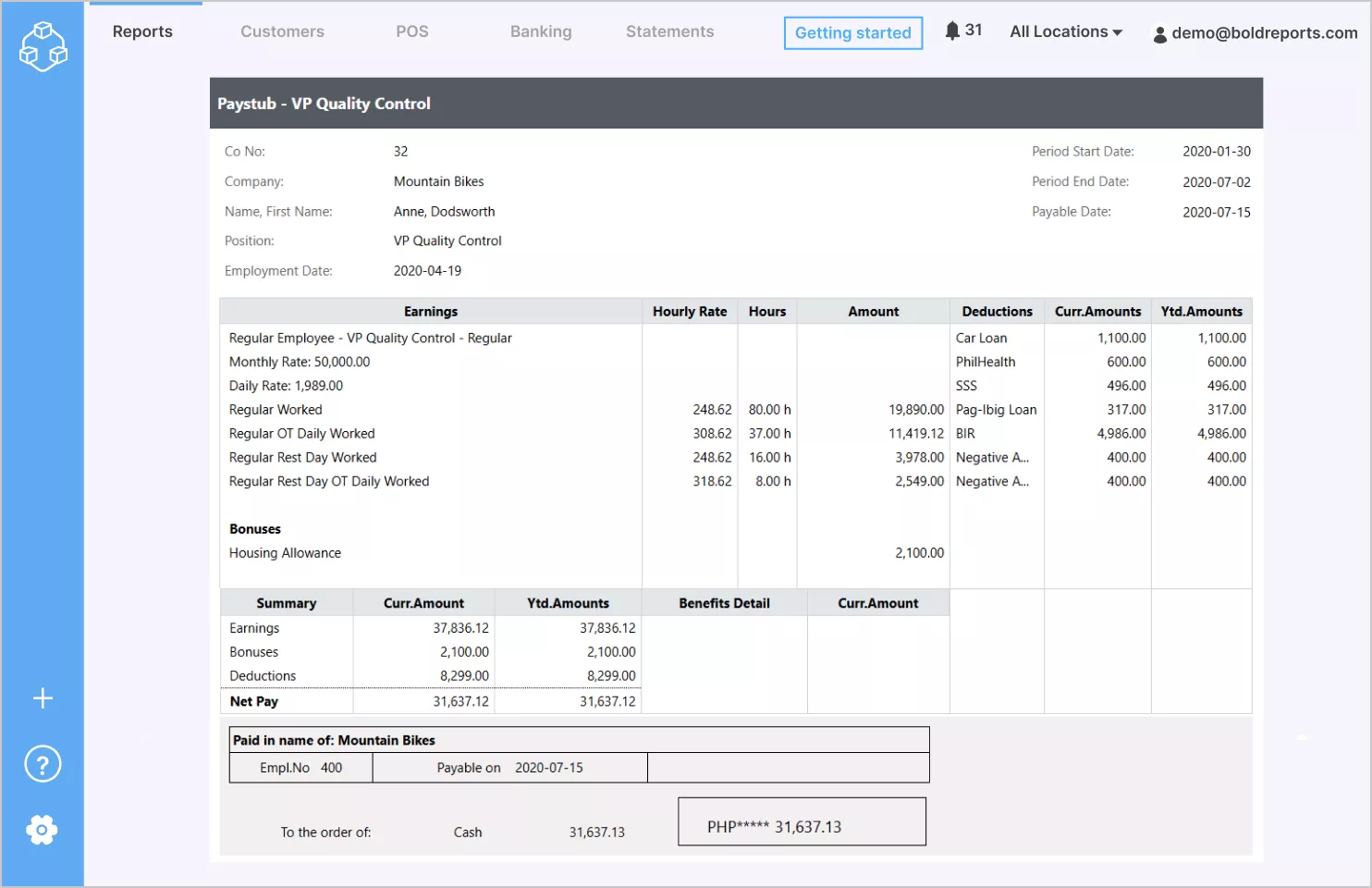
Paystub report – VP quality control report
HR departments deal with repetitive paystub generation, and employees often lack clarity on their earnings. This paystub report – VP quality control report simplifies paystub creation with dynamic data and formatted layouts, and it integrates reports into employee portals. This reduces HR workload and enhances transparency for staff.
Corporate consolidated balance sheet report
Corporations managing multiple entities face difficulties consolidating financial data, handling currency conversions, and maintaining compliance. This consolidated balance sheet report unifies data across subsidiaries, applies consistent formatting, and supports standards like IFRS and GAAP. They provide real-time financial insights through reports, aiding strategic decision-making.
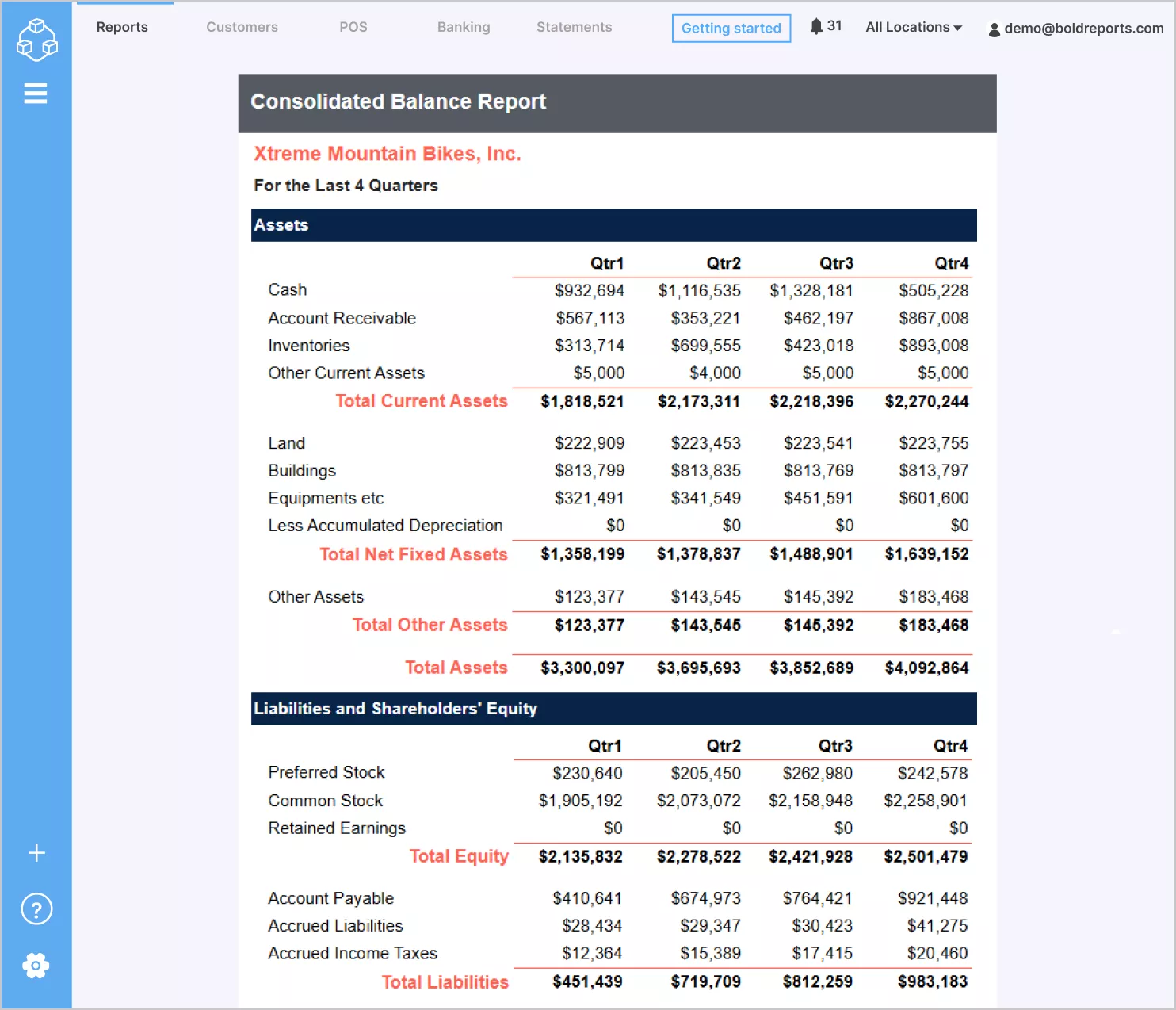
These use cases demonstrate how Bold Reports can transform financial reporting from a reactive task into a proactive strategic function.
Final thoughts: Embedded reporting in finance
Embedded reporting is revolutionizing finance by delivering real-time insights directly within business applications. Bold Reports® tackles key challenges like data security, integration, and usability—empowering finance teams to make faster, smarter decisions.
Want to stay ahead in financial reporting? Start your free trial and embed powerful reports to transform your business. You can also book a personalized demo and get an insightful walkthrough of creating a business report from scratch. Start embedding powerful business intelligence reporting inside your modern web apps today.


